
Annual RCIWG Meeting & Cumulative Impact Assessment Workshop — 30 April 2026.
The Tina River Hydropower Development Project (TRHDP) reached a significant environmental and social governance milestone on 30 April 2026, with the convening of the Annual Meeting of the Regional Cumulative Impacts Working Group (RCIWG) and Cumulative Impact Assessment Workshop at the Heritage Park Hotel, Honiara. The gathering formally established the RCIWG as a binding multi-agency mechanism under the 2024 Cumulative Impacts Management Strategy (CIMS), fulfilling a key commitment under the Project's Concessional Finance Parties agreements.
The workshop which brought together over 30 representatives from across government, industry, civil society, and international development finance partners such as World Bank, Asian Development Bank. Participating agencies and organisations included the Ministry of Mines, Energy and Rural Electrification (MMERE) and its TRHDP Project Office, the Ministry of Environment, Climate Change, Disaster Management and Meteorology (MECDM), the Ministry of Infrastructure and Development (MID), the Ministry of Lands, Housing and Survey (MLHS), the Ministry of Health and Medical Services (MHMS), Tina Hydropower Limited (THL), Hyundai Engineering Company (HEC), Solomon Power, the Tina Core Land Company (TCLC), the Women’s Association, the Community Benefit Sharing Program Phase 2 (CBSP2) team, and Norconsult as the Lender's Technical Advisor and Independent Environment and Social Monitoring Agent.
Opening Remarks
The workshop was formally opened by the Permanent Secretary of the Ministry of Mines, Energy and Rural Electrification, who underscored the Project's significance to Solomon Islands' energy security and the Government's commitment to transparent environmental and social management. The Deputy Project Manager, Mr. John Korinihona, welcomed all delegates and set the context for the day's proceedings, emphasising that the RCIWG represents a collaborative, evidence-based approach to identifying and managing the cumulative social and environmental pressures that accompany large-scale infrastructure development.
Chris Vehe Permanent Secretary MMERE quoted “This Platform sets an obligation to set the standard for how we assess and manage the cumulative pressures that large-scale development places on people and on the natural environment”
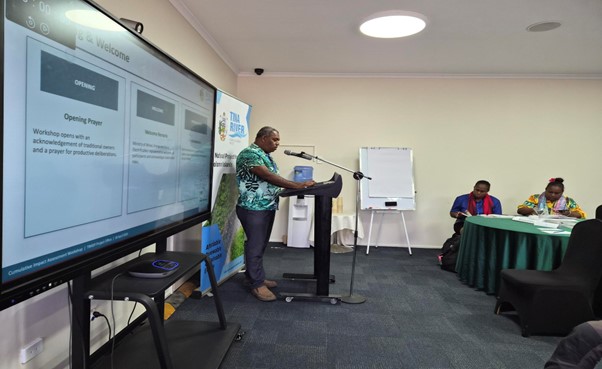
Caption: Dr. Christopher Vehe, Permanent Secretary, Ministry of Mines, Energy and Rural Electrification, welcoming participants at the opening of the RCIWG Meeting, Heritage Park Hotel, 30 April 2026.
Nine Priority Cumulative Impact Themes
Facilitated by the Environmental and Social Safeguards Manager (ESSM) Mr. Sahibzada Tanzeel Ahmed, the workshop walked participants through the original nine- priority cumulative impact (CI) themes identified in the 2024 CIMS study, drawing on evidence from the Social Impact Monitoring Plan (SIMP), grievance records, THL field reports, and Lender's Technical Advisor site observations. The nine priority themes were:
- Population Influx and In-migration
- Social Disruption and Community Cohesion
- Land Use Change and Access
- Employment and Livelihood Transformation
- Traffic and Road Safety
- Public Health and Disease Burden
- Cultural Heritage and Customary Practice
- Biodiversity and Habitat Quality
- Water Quality and Availability
The 2025 SIMP dataset - encompassing quarterly field assessments across three indicator categories - showed stable or positive trends in physical amenity and coping capacity, while three KPIs related to traditional lifestyle, social cohesion, and perceived employment fairness recorded declining scores, flagging these areas for targeted management attention in 2026.
Sahibzada Tanzeel, ESSM: quoted "Regionally, the volume of infrastructure projects in Guadalcanal is increasing. It is important that we develop a spatial and temporal overview of the region periodically, one that captures how these developments collectively interact with the social and natural environment, not just how each project performs in isolation."
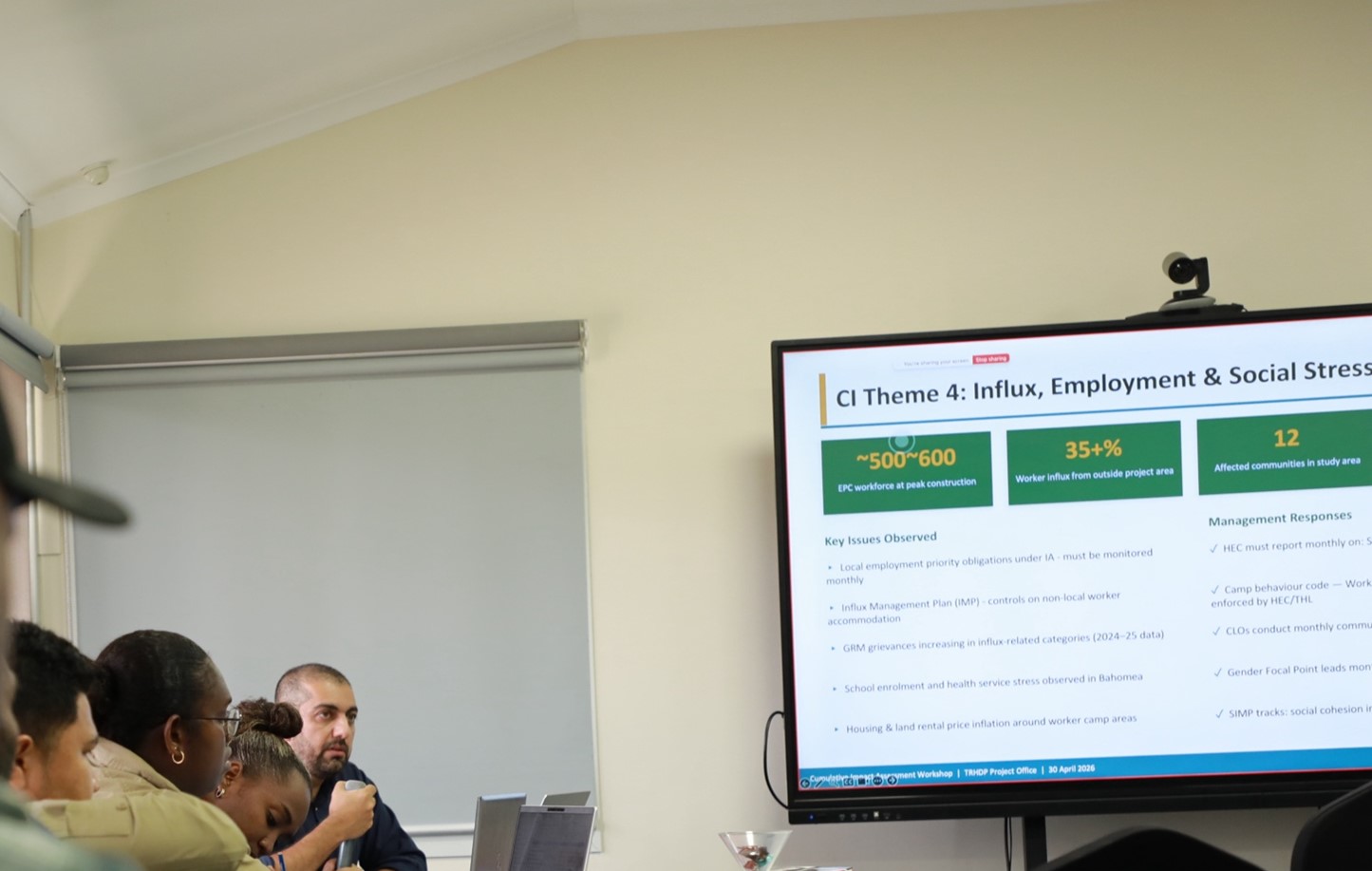
Caption: [ESSM Name]—Environmental and Social Safeguards Manager, Project Office, MMERE, facilitating the Cumulative Impact Assessment workshop session, Heritage Park Hotel, 30 April 2026.
Bahomea Identified as Cumulative Impact Hotspot
Drawing on field evidence, grievance data, and participant knowledge, the working group formally identified the Bahomea area as a cumulative impact hotspot a location where the convergence of multiple project-related pressures creates heightened risk for affected communities. A dedicated Bahomea Hotspot Action Plan is to be developed through consultative engagement with the local community and key agencies, with completion targeted by 30 June 2026.
Methodology and Attribution Framework Endorsed
A significant technical outcome of the workshop was the group's endorsement of the Project Office's proposed methodology for attributing observed social changes to project-related causes versus broader regional drivers. This attribution and control area framework which distinguishes direct project effects from background trends was assessed by participants as a sound and proportionate approach to cumulative impact assessment in the TRHDP context and will underpin future RCIWG monitoring and reporting.
Seven Formal Decisions Recorded
The inaugural meeting recorded seven formal decisions, including:
- Formal establishment of the RCIWG as a standing multi-agency body under the 2024 CIMS.
- Endorsement of the RCIWG Terms of Reference, with membership expanded to include the Ministry of Lands, Housing and Survey; Ministry of Infrastructure and Development; Ministry of Fisheries and Marine Resources; Ministry of National Planning and Development Coordination; and the National Women's Council of Solomon Islands.
- Recognition of Bahomea as a CI hotspot, with a dedicated Hotspot Action Plan to be delivered by 30 June 2026.
- Endorsement of the attribution and control area methodology for cumulative impact assessment.
- Agreement on an annual meeting cadence, with the next RCIWG meeting to be held in Q1 2027.
- Approval of five additional agencies as RCIWG Observer Members.
- Confirmation of the CIMS as a binding E&S instrument informing quarterly Project Office reporting to Concessional Finance Parties.
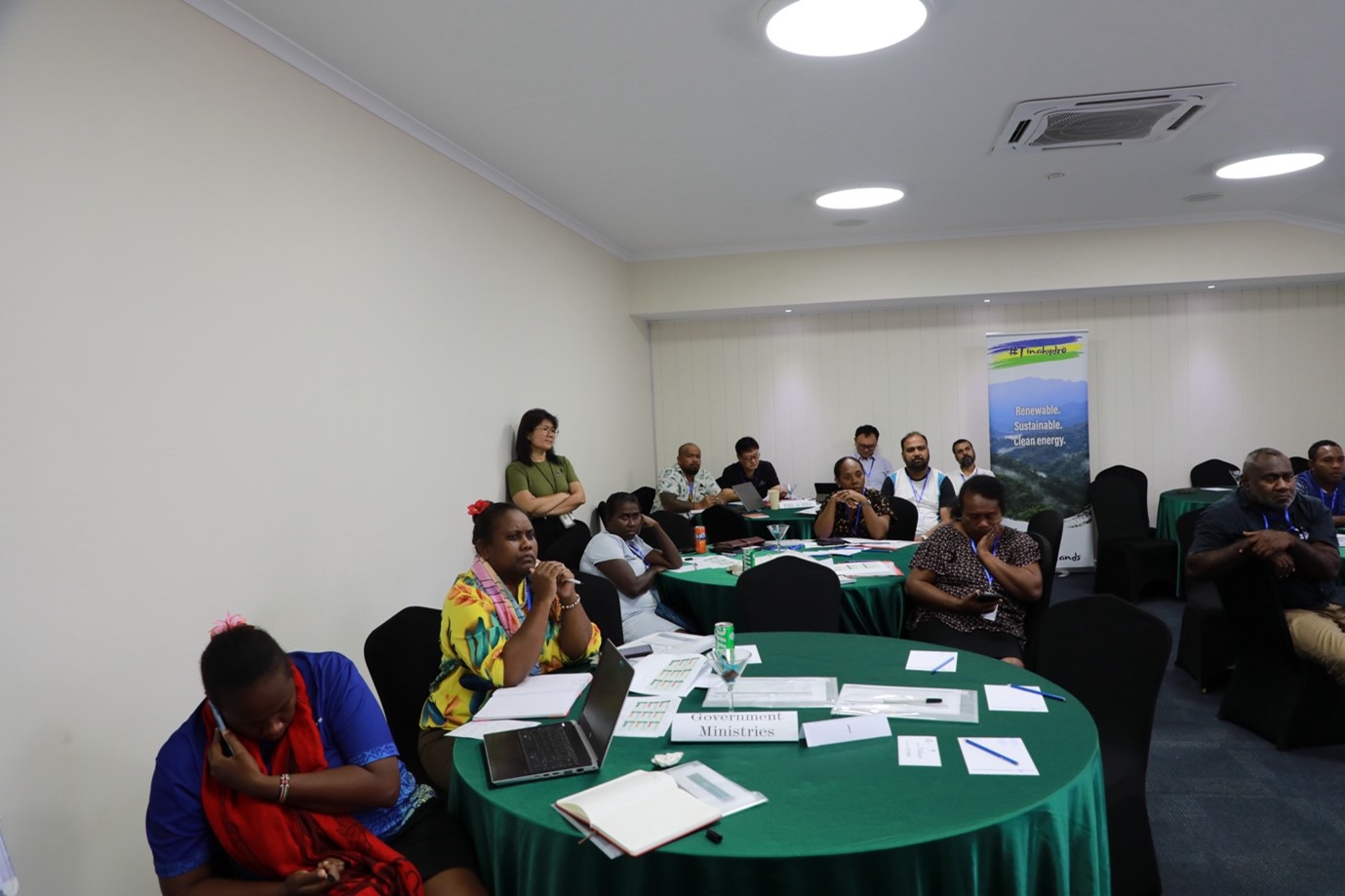
Caption: RCIWG participants during the formal working group session, Heritage Park Hotel, Honiara, 30 April 2026.
The Road Ahead
Mr. Tanzeel (ESSM Quoted) that the establishment of the RCIWG marks a transition from reactive issue management to proactive, evidence-driven governance of cumulative social and environmental impacts across the project region.
Deputy Secretary, MECDM:
"Cumulative impacts understanding is an important area, and government agencies as well as individual projects must strengthen their coordination on this. The RCIWG will serve as an important platform for the Government of Solomon Islands to fulfil that collective responsibility."
The Project Office will circulate workshop materials, draft Minutes of Meeting, and a consolidated Action Matrix to all participants within five working days. Over the coming months, key deliverables include the Bahomea Hotspot Action Plan, an updated RCIWG Terms of Reference incorporating expanded membership, and continuation of the SIMP quarterly data cycle.
The MMERE Project Office warmly thanks all participants for the quality of their engagement and the candour with which field-level insights were shared. The collaborative spirit of the inaugural RCIWG session provides a strong foundation for this important governance mechanism going forward.
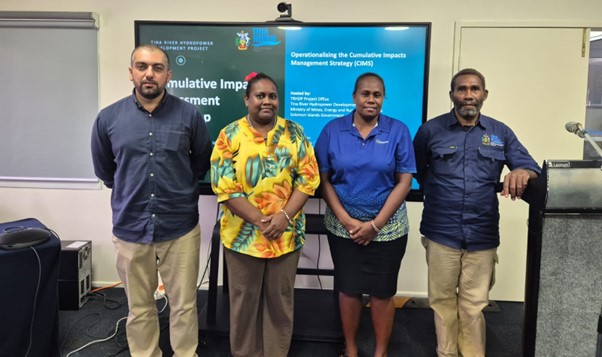
Caption: Multi-agency participants at the Cumulative Impact Assessment Workshop, Mr. Baltazare Rongo Community Liaison Officer Project Office, Debra Kereseka Deputy Director MECDM, Agnetha Vave-Karamui Deputy Secretary Technical for the MECDM, Sahibzada Tanzeel (ESSM Project Office TRHDP MMERE), at the Workshop event, 30 April 2026.
For more information, contact:
Communications Officer: Jeanine Gadepeta email: jeanine.gadepeta@tina-hydro.com
Tina Hydropower development project
+677 25133
About Tina River Hydro Development Project (TRHDP)
The first large scale renewable energy project for the Solomon Islands delivering benefits such as more affordable electricity and improved accessibility to cleaner, more reliable energy sources for communities now and in the future. It is being implemented by the Solomon Island Government with financing and support from the Abu Dhabi Fund for Development, the Asian Development Bank, the Government of Australia, the Green Climate Fund, Korea EX-IM Economic Development Cooperation Fund, and the World Bank.
Find out more on www.tina-hydro.com
A National Project of Solomon Islands | Tina River Hydropower Tina River Hydropower is a National Project of Solomon Islands and has as its objective to provide more affordable and reliable energy options to Honiara. www.tina-hydro.com |
or follow us on Facebook, LinkedIn, and YouTube